

Sassicaia wine buying guide for 2026
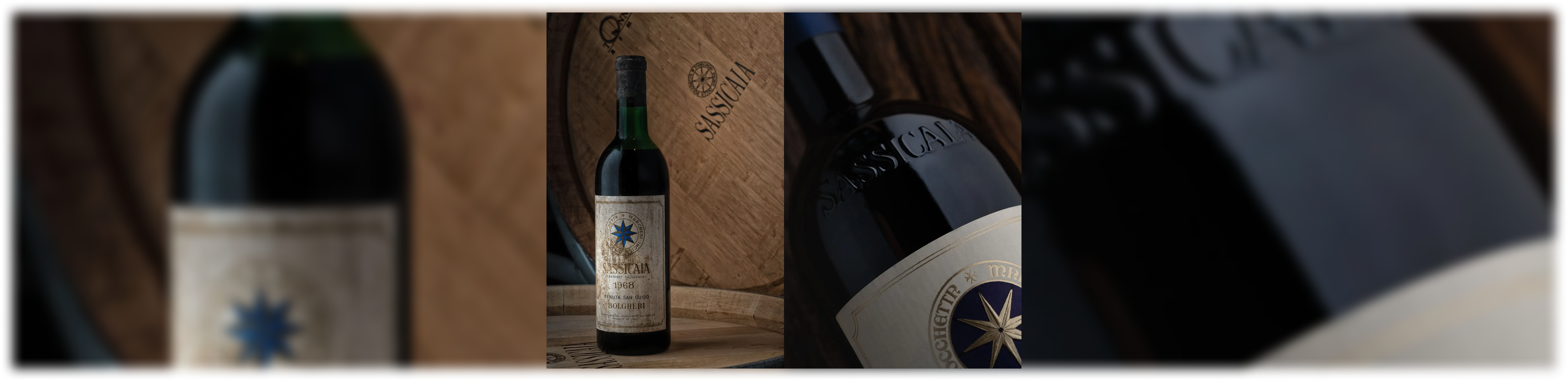
Sassicaia wine is the original Super Tuscan, born in 1968 from the intuition of Marquis Mario Incisa della Rocchetta, who wanted to produce a Bordeaux style wine in Bolgheri, Tuscany. We blind tasted bottles of this iconic Italian red wine and rated them between 4.6/5 and 5/5 to bring you our top pick: Tenuta San Guido 2022 (5/5, ~$1,700).
By
Last updated:
Table of Contents
Buy the best Sassicaia wine vintages
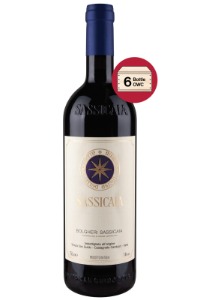
Tenuta San Guido Sassicaia (6 Bottles in OWC) 2022
Tuscany, Italy
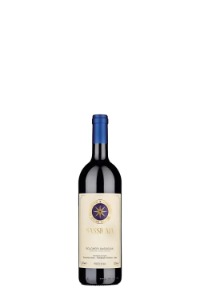
Tenuta San Guido Sassicaia, 2022, 1.5L
Tuscany, Italy
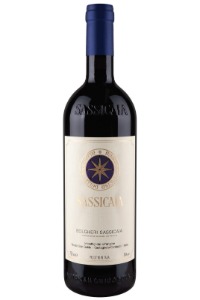
Tenuta San Guido Sassicaia 2023
Tuscany, Italy
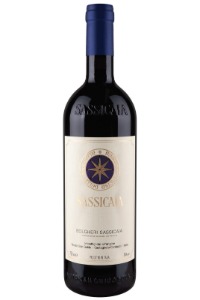
Tenuta San Guido Sassicaia 2022
Tuscany, Italy
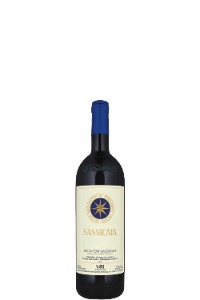
Tenuta Guido Sassicaia 2020
Tuscany, Italy
Our selection includes the best Sassicaia wines for sale today. Ranging from the elegant 2020 vintage (4.6/5) to the iconic Tenuta San Guido Sassicaia 2022 vintage (top rated, 5/5), available in a 6 bottle pack for ~$1,700. Each of these bottles was blind tasted by our editorial team and selected for its balance, structure and 90+ critic ratings.
What is Sassicaia wine?
- Sassicaia
Sassicaia is a Bordeaux style Italian wine blend, produced mainly with Cabernet Sauvignon (85%) and 15% of Cabernet Franc. It is an elegant, structured wine that perfectly reflects the exclusivity of its terroir, which offers such unique climatic and geological conditions that in 1994 it was awarded its own DOC designation, the Bolgheri Sassicaia DOC.
Sassicaia wine is considered the pioneer of Super Tuscans, wines created thanks to the creativity of producers who decided to experiment with international grape varieties and aging in French oak barrels for 24 months.
Initially labeled as a table wine, it proved that high quality wines could challenge the rules without compromising on excellence, leading to the creation of the IGT categories and subsequently the DOC Bolgheri Sassicaia. Its distinctive special organoleptic notes have made it famous worldwide.
What are the best Sassicaia wine vintage years?
The best Sassicaia wine vintages stand out for their exceptional qualities and unique characteristics, highlighting the skills of the winemakers and emphasizing the nuances of each growing season. Below, you will find information on the Sassicaia wine price and recommendations for Sassicaia wine vintages worth adding to your cellar:
- 1968 was the first year Sassicaia wine was sold and it is considered the symbolic birth year of the first Super Tuscan. Bottles from this vintage are extremely rare and sought after by collectors as they represent a significant piece of the world’s wine history. Aromatically, they offer notes of ripe red fruits, Mediterranean herbs and hints of tobacco. The tannins are well integrated and silky.
- 1958 is considered one of the Sassicaia best vintages ever and has received excellent scores from international critics, consolidating Sassicaia’s reputation as one of the best Italian wines. It is a vintage with extraordinary aging potential. The nose offers complex aromas of cedar, blackcurrant, blackberry and toasted notes. The palate is concentrated and powerful, with sweet tannins and a long finish.
- 2006 is often cited as the year of the best modern harvest, producing an Italian Sassicaia wine with a refined and deep texture. Critics have described it as a “classic” Sassicaia vintage, characterized by great aging potential.
- 2015 is another of Sassicaia’s best vintages. This wine stands out thanks to its extraordinary aromatic intensity, robust tannins and full bodied structure, making it ideal for collectors seeking a vintage with great aging potential and depth of flavour.
- 2016 was a slightly cooler year than 2015, with ideal temperature variations that promoted uniform ripening of the grapes and a perfect balance between acidity and structure. These harmonious climatic conditions resulted in a more balanced and refined Sassicaia than the 2015 vintage, which is more powerful and concentrated.
- 2019 is recognized as one of the best vintages of recent decades, with international critics ranking it just below the legendary 1985 and 2016 vintages. This vintage embodies the stylistic precision characteristic of the finest Bolgheri wines and boasts an especially intense fruity and aromatic richness.
Sassicaia wine 2010 also deserves a mention, a vintage considered a benchmark for lovers of the more traditional Sassicaia style. 1982 Sassicaia wines are a “forgotten gem”, often overshadowed by the legendary 1985 vintage. They are characterized by distinctly elegant dried fruit and herbal notes, differing from the more opulent and jammy Super Tuscans.
Sassicaia wine tasting notes and terroir characteristics
Sassicaia wines tasting notes reflect the uniqueness of the Bolgheri terroir, as well as the meticulous production methods employed at Tenuta San Guido. The wine has a rich bouquet that combines aromas of blackberry fruits and spicy notes. It is aged in French oak barrels, which adds subtle undertones of cedar and tobacco. The vineyard’s unique soil composition is also evident in the earthy nuances that make Sassicaia wine truly special.
In 2013, with the publication of the relevant decree by Mipaaf, Sassicaia separated from the Bolgheri DOC and became an autonomous DOC, the Bolgheri Sassicaia DOC. Thanks to this recognition, Sassicaia is the first Italian wine produced by a specific winery to have a dedicated DOC. In fact, the Bogheri Sassicaia designation can only be used by Tenuta San Guido, where Sassicaia is produced. This level of distinction is almost unparalleled in Italy and is comparable to the French concept of “Cru” reserved for parcels or estates of excellence.
But what are the characteristics of this exclusive terroir? The Bolgheri region, located in the Tuscan Maremma, enjoys a Mediterranean climate with hot, breezy summers and mild winters, ideal for viticulture. The soil is gravelly and sandy, and there is also a large presence of stones that reflect heat during the day and release it at night, promoting slow and uniform ripening, similar to the famous Graves soils in Bordeaux.
Tenuta San Guido: home of Sassicaia Italian wine
In 1948, Marquis Mario Incisa della Rocchetta realized that the soil on his San Guido estate had similar characteristics to that of the Graves region in Bordeaux and decided to plant the first Cabernet Sauvignon and Cabernet Franc vines, convinced that he could produce excellent Bordeaux style wines. For years, the Sassicaia produced from the San Guido estate’s vines was intended for family and friends. In 1968, thanks also to the collaboration with enologist Giacomo Tachis, Nicoló Incisa della Rochetta, son of legendary Mario, decided to market it.
Today, the estate cultivates over 80 hectares of vineyards dedicated exclusively to Sassicaia wine, with deliberately low yields to ensure concentration and superior quality. Although it also produces other wines such as Guidalberto and Le Difese, Sassicaia remains the estate’s flagship wine.
Interesting fact: Tenuta San Guido covers over 2,500 hectares, but only the most suitable vineyards produce Sassicaia, demonstrating the rigorous selection of the terroir. The Marquis’ project and Tachis’ work have created a production model that has been replicated all over the world, where quality and selection of raw materials are fundamental to success.
Sassicaia wine making techniques
Sassicaia wine is produced through a perfect balance between traditional techniques and modern innovation. The harvest is carried out exclusively by hand between late September and early October and only the best grapes are picked.
Once the harvest is complete, the grapes are fermented in temperature controlled stainless steel tanks for 10-15 days. Aging lasts at least 24 months in French oak barriques, with a balanced percentage of new and second use wood. While aging, the wine develops aromas ranging from ripe berries to sweet spices, light herbaceous and mineral notes, as well as tertiary complexities such as tobacco, leather, and truffle in the more mature bottles. Only after adequate rest in the bottle is Sassicaia released into the market, ready to express its full potential.
Designing the perfect menu for Sassicaia wine
Sassicaia is a structured and complex wine that pairs perfectly with rich and intense courses. The most iconic pairing is definitely with Florentine steak, where the succulence of the meat and fat find a perfect counterpoint in the structure of the wine. Similarly, braised beef, roast veal and slow cooked meats are enhanced by the spicy notes and persistence of Sassicaia wine. Sassicaia wine also pairs well with game, such as wild boar or venison and with structured first courses, such as pappardelle or tagliatelle with flavorful sauces. Another perfect pairing is with black truffle dishes or creamy risottos, where the earthy nuances of the wine interact elegantly with the dish.
For serving, we recommend a temperature of 61–64°F (16-18°C) and the use of large glasses and a good decanter to let all the nuance and depth of Sassicaia wine really shine. Below, we have selected the best accessories to fully enjoy Sassicaia wine.
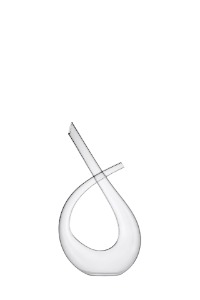
Waterford Elegance Accent Decanter, 38 oz
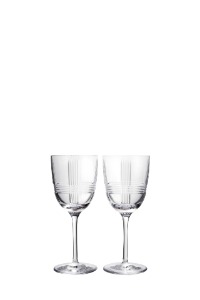
Waterford Marquis Vector Red Wine Glasses, Set of 2, 9.5 oz
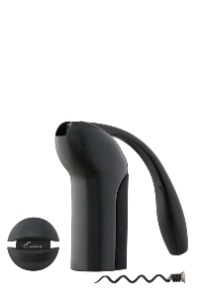
Vertical Rabbit Corkscrew in Graphite
How we rate Sassicaia wines
Our editorial team rates wines on a 5 point scale, assigning scores based on the appearance, aroma/bouquet, flavor/palate and overall impression of the wine. Any wine bottle we recommend has been blind tasted by our expert tasting panel: no labels, no bias. The scores are aggregated over 50 points, before they are converted to the simple 5 point scale that you see.
Our rating scale can be interpreted thus:
- 5 = Exceptional
- 4 = Excellent
- 3 = Very Good
- 2 = Good
- 1 = Fair
What do we look for in the wine?
- Appearance (up to 5 pts): clarity, color, brightness
- Aroma & bouquet (up to 15 pts): intensity, complexity, absence of flaws
- Flavor & palate (up to 20 pts): balance of acidity, tannin, alcohol; depth, mouthfeel
- Overall impression (up to 10 pts): harmony, complexity, typicity, finish, aging potential
We also specifically evaluated Sassicaia wines based on the following:
- Complex aromas featuring Mediterranean herbs, red fruits and hints of graphites.
- Balance: integrated velvety tannins blended in with rich fruit notes are an indicator of quality.
- Finish: the finish should be long, polished and persistent with minty or balsamic hints.
To ensure that our ratings remain context appropriate, we rated Sassicaia wines only against other vintage Super Tuscan bottles. This way, we can ensure quality and balanced tastes across a wide price range.
A note from our team: wine preferences are determined by personal taste and we understand this. The scores we assign are a reflection of the palate and opinions of our tasting team. Therefore, we recommend that you read our tasting notes to find the Sassicaia wine bottles you will enjoy the most!
You might also be interested in
FAQs on Sassicaia wine
What grapes are in Sassicaia wine?
Sassicaia wine is typically produced from 85% Cabernet Sauvignon and 15% Cabernet Franc. This choice, revolutionary for Tuscany in the 1960s, reflects the desire of Marquis Mario Incisa della Rocchetta, who wanted to produce a Bordeaux style wine on his San Guido estate.
Is Sassicaia wine a Super Tuscan?
Yes, Sassicaia is considered the forefather of Super Tuscans. Created through intuition and a desire to experiment, it proves that quality can transcend formal rules. Its international success paved the way for a new category of high quality Tuscan wines and led to the recognition of the Bolgheri Sassicaia DOC.
What food pairs best with Sassicaia wine?
Sassicaia wine pairs well with structured, elegant dishes such as roast red meat, game, braised meat, lamb and beef tenderloin. It is also excellent with aged hard cheeses or rich first courses such as pappardelle alla bolognese and truffle risotto.
What is the best Sassicaia wine?
There is no absolute best Sassicaia wine, but there are legendary vintages, such as 1985, 2006, 2015 and 2016, that are considered to be of the highest quality. Each vintage reflects the Tenuta San Guido estate's climatic conditions and offers a unique interpretation of its incredible terroir.
What does Sassicaia stand for?
The name Sassicaia derives from the word “sasso,” referring to the rocky and stony soil on which the vineyards are planted. These soil characteristics promote drainage and give the wine structure, finesse and longevity.
Is Sassicaia wine worth it?
Yes, Sassicaia is worth it for anyone looking for an excellent Italian wine with a rich history. It is a wine that combines elegance, complexity and extraordinary aging potential. Its high quality and prestigious reputation certainly justify the Sassicaia wine price.
Is Sassicaia a good investment?
Sassicaia is an excellent wine investment, especially if you buy bottles from the best vintages. Limited production, strong international demand and an excellent reputation have made Sassicaia one of the best Italian wines. It is also an excellent wine for aging, making it perfect for both wine lovers and collectors.
How much is Sassicaia wine?
The price of Sassicaia varies depending on the vintage. Recent vintages generally range between $250 and $400 per bottle. Historic or particularly celebrated vintages can exceed these figures by a wide margin, reaching much higher prices.
Where is Sassicaia wine made?
Sassicaia is produced exclusively in Bolgheri, on the Tuscan coast, at the Tenuta San Guido estate. The vineyards are located between 328 and 1,312 feet (100-400 meters) above sea level and enjoy a climate characterized by cool, breezy summers and mild winters. It is the only Italian wine to boast a DOC designation reserved for a single label.
Who is Sassicaia's winemaker?
Sassicaia's historic winemaker is Giacomo Tachis, a key figure in modern Italian winemaking. He defined the style of the wine, working alongside the Incisa della Rocchetta family from the very beginning. Today, his technical and cultural legacy is carried on by the Tenuta San Guido winemaking team, who follow his innovative vision.
What makes Sassicaia special?
Sassicaia wine is special because it changed the history of Italian wine. It is a wine born from an intuition that broke the established rules and it is produced in a unique terroir using techniques that preserve its quality. Sassicaia is a wine that combines power and elegance with extraordinary longevity and consistent quality, recognized worldwide.