

Zinfandel red wine: our top picks for 2026
Zinfandel red wine is the wine of America: bold, fruity and versatile, it is the third most planted red wine grape in California, right after Pinot Noir. Come along to discover the best red Zinfandel wines of 2026, top brands and food pairings.


Table of Contents
10 Best red Zinfandel to buy
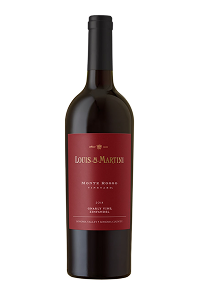
Monte Rosso Gnarly Vine Zinfandel – Louis M. Martini 2018
Sonoma County, California, US
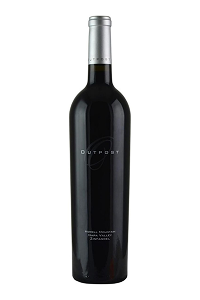
Howell Mountain Zinfandel – Outpost 2022
Napa Valley, California, US
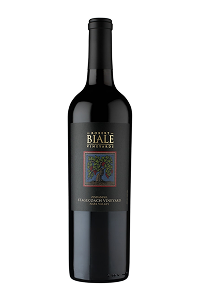
Stagecoach Vineyard Zinfandel – Robert Biale Vineyards 2023
Napa Valley, California, US
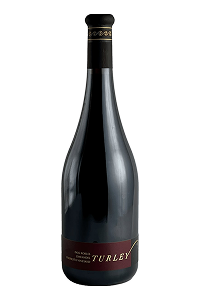
Ueberroth Zinfandel – Turley Wine Cellars 2022
Central Coast, California, US
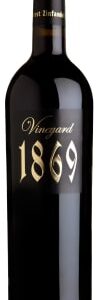
Vineyard 1869 Old Vine Zinfandel – Scott Harvey Wines 2020
Sierra Foothills, California, US
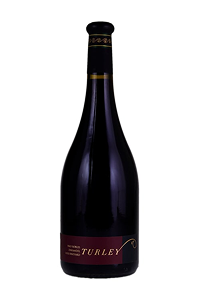
Dusi Zinfandel – Turley Wine Cellars 2022
Paso Robles, California, US
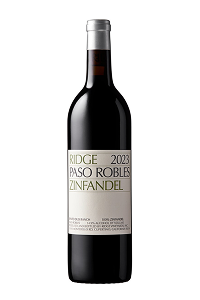
Paso Robles Zinfandel – Ridge Vineyards 2023
Paso Robles, California, US
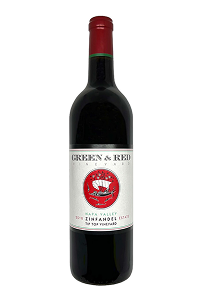
Tip Top Vineyard Zinfandel – Green & Red 2018
Napa Valley, California, US
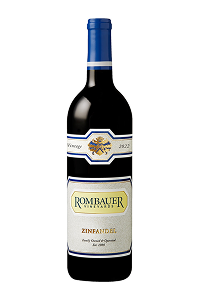
California Zinfandel – Rombauer Vineyards 2022
California, California, US
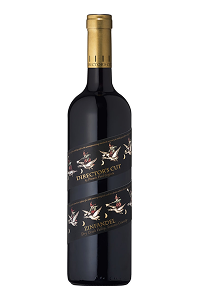
Director’s Cut Dry Creek Valley Zinfandel – Francis Ford Coppola Winery 2022
Sonoma County, California, US
The selection above is made up of 10 of the best red Zinfandel bottlings available this year. In curating the list, we have balanced the weight of critics’ reviews with genuine customer feedback to ensure our choice reflects what wine lovers value the most. Try out one or more of these bottles for a taste of the finest Zins that taste glorious when paired with dark chocolate dessert.
Red Zinfandel at a glance
| Red Zinfandel | Details |
|---|---|
| Grape Variety | Majorly 100% Zinfandel. Some winemakers produce field blends with Petite Sirah, Alicante Bouschet and Mourvèdre. |
| Origin | Croatia, now notably grown in California and Apulia (Italy) |
| Serving Temperature | 60-65°F (15-18°C) |
| Decanting | Recommended for 20 minutes to one hour |
| Aging Potential | 5-10+ years (depending on producer and vintage) |
| Flavor Profile | Jam, blueberry, cherry, boysenberry, plum, blackberry, spice, black pepper, tobacco |
| Structure | Light to medium bodied, moderate tannins, high acidity |
| Alcohol Content | 14% to 17% |
| Ideal Glass | Zinfandel wine glasses |
| Food Pairing | Barbecued meats, bold cheeses, grilled vegetables, spicy meals |
| Top Communes | Paso Robles, Sonoma, Napa Valley, Lodi, Amador County (California); Apulia (Italy) |
| Notable Producers | Turley Wine Cellars, Francis Ford Coppola, Green & Red, Rombauer, Robert Biale Vineyards |
Red Zinfandel is beloved for its flavors of ripe red fruits and underlying notes of exotic spices. Its high alcohol content ( between 14% and 17% ABV) is as a result of the ripe grapes used, with well rounded tannins that give it a light bodied structure and make it an ideal pairing for all kinds of dishes.
Fun fact: the 3rd Wednesday in November is National Zinfandel Day!
What are the best red Zinfandel wine types?
The best red Zinfandel wines are crafted from the same red grapes but vinified in different styles. They include:
Dry Zinfandel red wine is typically still and produced as a table wine with pronounced flavors of red fruits as well as soft tannins and high acidity. Dry red Zins have alcohol levels ranging from 13.5% to 16% and they are the most common styles available on the market today.
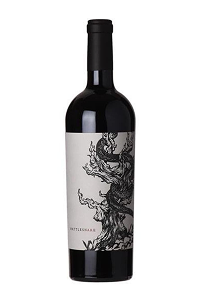
Mount Peak Rattlesnake Zinfandel 2021 – Sonoma County, California, US
Sweet/dessert Zinfandel red wines are made from late harvest Zinfandel grapes that are often overripe with high levels of residual sugar. Rich and concentrated fruit notes dominate these wines, and alcohol levels are often over 15%. Zinfandel Port is a fortified dessert wine made from overripe grapes to which distilled grape spirits have been added. It is a much rarer style compared to the dry reds.

Dashe Late Harvest Zinfandel 2019 – Sonoma County, California, US
Sparkling Zinfandel red wine is less common than any of the other styles, crafted by subjecting still red Zinfandels to a secondary fermentation. This process can take place inside the bottle or in large tanks using the Charmat method, leading to the creation of a delicate bubbly red.
What is Zinfandel red wine and how is it made?
Zinfandel red wine is a dry wine made from the Zinfandel grape, a black skinned variety with a unique ability to express its terroir and winemaking style. It is originally from Croatia, where it was known as Tribidrag (Crljenak Kaštelanski) but is now widely grown in California.
Zinfandel is characterized by strong and fruity flavors of blackberry, currant, peach, pepper and blueberry with a high alcohol content. It can vary in style from still and medium bodied to richer, sparkling options.
A vibrant and layered wine on its own, some winemakers produce field blends of Zinfandel by including smaller amounts of other grapes, such as Petit Syrah, for added complexity.
Let’s have a look at the red Zinfandel wine production process.
- Viticulture: Zinfandel’s grapes grow in tight bunches in warm but not too hot weather. The fruit ripens somewhat early and it is not uncommon to have an uneven ripening pattern. In a single cluster, there may be overripe grapes, unripe ones as well as raisin like berries.
- Harvesting can be done in two ways, with some winemakers choosing to vinify whole bunches despite the different ripening levels: the underripe grapes contribute to its bright acidity, while the riper ones bring fruit notes. Other producers may painstakingly separate and handpick grapes based on their levels of ripeness to ensure a consistent quality throughout.
- Maceration occurs just after destemming the grapes. They are then crushed to extract their juices, after which the crushed grapes and their skins are allowed to soak in the juice to give it its signature red color.
- Primary fermentation is the next step, where yeasts are introduced to convert the grape sugars into alcohol and create the wine. Red Zinfandel is fermented dry, which means that the yeasts are left to consume all the natural sugars in the must, until there is very little residual sugar left.
- Extended maceration is a widespread technique among Zin winemakers. They let the grapes sit on the skins for about 5 to 10 days after primary fermentation to extract more color and tannins into the wine.
- Malolactic fermentation is encouraged as it gives the wine a smoother mouthfeel and added complexity. The Zinfandel grapes contain a notable amount of malic acid, and if they are bottled without undergoing this fermentation process, the reactions end up taking place inside the bottle, turning it cloudy and fizzy.
- Aging in fine oak barrels for 12 to 18 months intensifies its flavors and allows for the development of toasty flavors of butter and vanilla. While aging, the wines may be transferred between barrels for aeration and clarification.
- Filtering and fining help to get rid of impurities and sediment as well as bacteria, to improve the overall quality of the red Zinfandel.
- Bottling is traditionally done in dark colored “claret style” bottles, which are then sealed off with natural corks.
Note: grapes meant for red Zinfandel wine are usually harvested between 23°Brix and 26°Brix when they’re sweet enough and dark fruit flavors have developed.
Spotlighting the Zinfandel red wine grapes
Zinfandel is the major grape variety used to make Zinfandel red wines. It is a dark variety with thin skins that can have different flavors depending on where it was grown. Zinfandels from cooler terroirs have predominant red berry flavors, while wines made in warmer areas have detectable notes of anise, pepper and blackberries.
The degree of ripeness of the grapes determines the taste of the wines, and red Zinfandel grapes can be categorized into the following:
Producers may choose to craft field blends with their red Zinfandel grapes and these bottles can be labeled as “Zinfandel” if there is at least 75% of the grape present in the mix. Here are some of the grapes often used in these blends:
A walkthrough of the best American red Zinfandel wine vintage chart
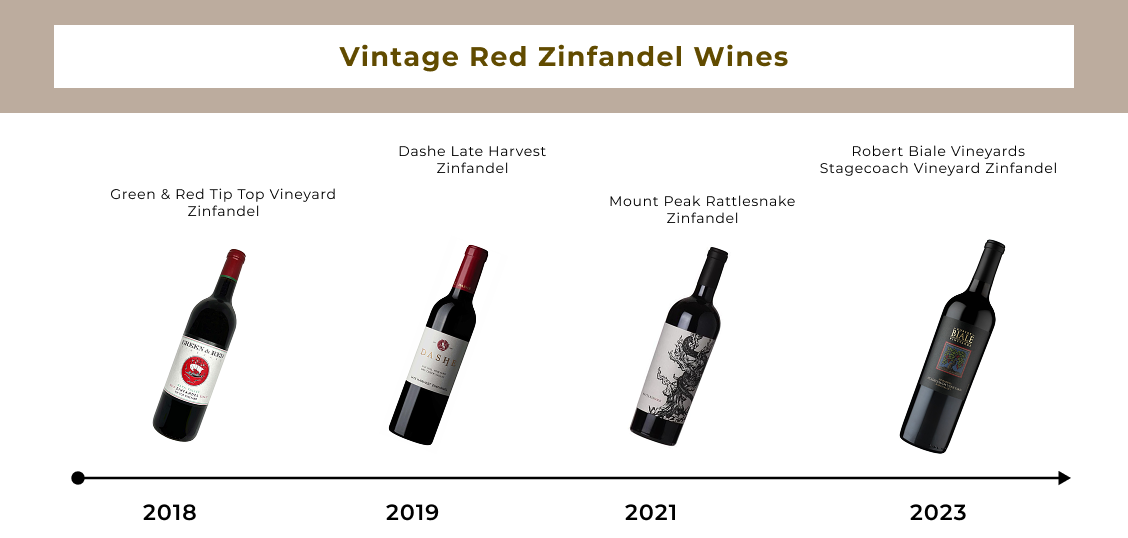
Zinfandel red vines perform excellently in long, warm growing seasons that are neither too hot nor too wet. In years with ideal weather, the grapes ripen beautifully with the right amounts of acidity and freshness to yield delicious wines. Here are some of the best vintages for American red Zinfandel wines along with the characteristics that make them stand out in the eyes of experts:
| Best Red Zinfandel Vintages | Vintage Characteristics |
|---|---|
| 2023 | A stellar year with a cool summer, uninterrupted by rain in the fall, led to a long growing season and fine, complex Zinfandels. |
| 2021 | Moderate fall temperatures led to the production of charming and stellar wines despite the hot season and ongoing drought. |
| 2019 | A year with a warm growing season resulting in juicy, fruit forward Zinfandels perfect for short term drinking. |
| 2018 | A classic vintage with an ideal growing season that yielded rich, approachable and structured wines. |
| 2008 | Wines of this vintage show an impressive richness and balance despite the unusual weather conditions during the growing season. |
Top rated red Zinfandel wine brands
Zinfandel grapes thrive in many places worldwide but California is the most notable terroir for its growth and production. Several estates, located in Lodi, Paso Robles, Sonoma County, Napa Valley and Amador County stand out for producing top rated red Zinfandel wines. Let’s see them in detail:
Turley Wine Cellars (Napa Valley), has built a reputation on preserving history by sourcing fruits from old vines, some of them planted already in the late 1800s. Their wines are crafted according to organic farming and traditional methods that result in wines with remarkable depth and intensity.

Turley Wine Cellars Juvenile Zinfandel 2023 – California, US
Sobon Estate Winery (Amador County) is one of the oldest estates to continuously produce Zinfandel red wines. The warm days and the rocky soils of the estate bring out in wines bold, jammy and spiced notes, achieving peak richness in the “Old Vine” and “Rocky Top” bottlings.
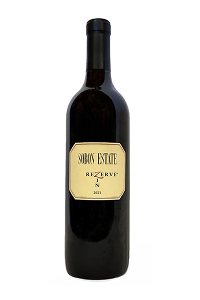
Sobon Estate Rezerve Zin 2021 – Amador County, Sierra Foothills, California, US
Cline Cellars (Contra Costa County) has built its reputation on crafting good red Zinfandel wines at an approachable price. Their celebrated “Ancient Vines” Zinfandel is crafted from vineyards more than a century old, yielding rich wines with strong aromas of fruits, peppery spice and mocha.
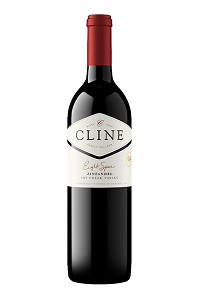
Cline Eight Spur Zinfandel 2023 – Sonoma County, California, US
Green & Red Vineyard (in Napa Valley) tells a completely different story from the other estates. Their vineyards are perched high in the Vaca Mountains, producing Zinfandel wines with an unmistakable minerality and freshness, carrying notes of lush berries, citrus zest, herbs and tobacco. Green and Red is definitely one of those estates favored by both critics and enthusiasts.

Green & Red Chiles Mill Vineyards Zinfandel 2018 – Napa Valley, California, US
Seghesio Family Vineyards (in Sonoma County) traces back to the 19th century, when Italian immigrant family Seghesio turned Zinfandel into a signature style that balances ripe fruit with spice and structure. Their Old Vine bottlings capture all the elegance of the Sonoma terroir while their single vineyard reds are acclaimed as some of the best Zinfandel red wines of the region.

Seghesio Old Vine Zinfandel 2023 – Sonoma County, California, US
A. Rafanelli Winery (Dry Creek Valley, Sonoma County) has remained a boutique gem known for small production and an unwavering focus on quality. Rafanelli’s Zinfandel reds are refined and structured, with layers of blackberry, spice and floral notes that age gracefully over time.
Serving tips to savor good red Zinfandel wine
Good red Zinfandel wine is big and complex due to its light tannins and lively acidity. Its high alcohol content (14% to 17% ABV) also gives it an oily texture, with notable jammy flavors and a smoky finish. Perhaps the most important tip you need to enjoy red Zin is to pour it slightly chilled, the sweet spot being 60°F (15°C). This temperature is cool enough to highlight its rich texture without muting its aromas and complexity.
What are some other tips to get the best red Zinfandel taste?
- Store your red Zinfandel wine lying horizontally between 55°F and 57°F.
- Pop it into your wine fridge for about 20 minutes before pouring, aiming for 60°F to 65°F.
- Let the wine breathe!
- Decant for about 30 to 60 minutes to allow its complex aromas to evolve.
- Serve it in a Zinfandel glass with a slim bowl and moderate sized rim.
Zinfandel red wine pairing essentials to impress your guests
Zinfandel red wine is a natural pairing with barbecue and meat dishes. Its spice notes and sweet taste make it a harmonious match with savory dishes like grilled vegetables and pork tonkatsu. Taste preferences are personal, but a general rule of thumb when it comes to selecting Red Zinfandel food pairings is to look out for the spices you taste in your wine and add them to your dish. Below is our guide to some popular and niche pairing ideas for red Zinfandel wine, as well as bottle recommendations to try out.
| Food | Best Red Zinfandel Wine | Aged | Type & Structure |
|---|---|---|---|
| Barbecued pork ribs, venison, roast leg of lamb, brisket | Robert Biale Vineyards Black Chicken Zinfandel 2023 | 1 to 2 years, ABV 14.7% | Fine grained tannins, bold aromas of blackberry, orange peel, plum and baking spices. |
| Sweet and sour chicken, roast duck with black cherry glaze, quail, grilled turkey | Ridge Pagani Ranch Zinfandel 2023 | 1 to 2 years, ABV 14.4% | Complex and elegant with an enticing nose of strawberry, fennel, orange zest and toasty oak. |
| Tuna, Bouillabaisse, blackened salmon, grilled shrimp with Chile | Turley Presenti Zinfandel 2023 | 1 to 2 years, ABV 15.6% | Chalky tannins and aromas of flowers, plum, licorice and smoked pepper. |
| Tomatoes, grilled eggplant, roasted mushrooms, caramelized onions | Bedrock Wine Company Evangelho Heritage Red 2023 | 1 to 2 years, ABV 14.5% | Ripe and full bodied with hints of red berries, mint, spice and blood orange. |
| Pizza, mole poblano, cheeseburgers, curry | Preston Vineyards Zinfandel 2022 | 1 to 2 years, ABV 14.6% | Layered with dusty tannins together with notes of plum, peppercorn, licorice and cherry. |
| Aged cheddar, smoked Gouda, grilled halloumi | Puccioni Vineyards Old Vine Zinfandel 2021 | 1 to 2 years, ABV 14.5% | Elegant mouthfeel, layers of plum and black cherry accompanied by nuances of mocha, violet, allspice and coriander. |
| Spaghetti bolognese, lasagna, penne arrabbiata | Seghesio Cortina Zinfandel 2021 | 1 to 2 years, ABV 15% | Briary raspberry, graham cracker crust and a subtle hint of cocoa powder lead to bright acidity on the palate. |
High end Zinfandel wine glasses and accessories on Amazon
The best glass for red Zinfandel is one with a narrow tulip shape and a slim bowl that can concentrate and funnel the juicy fruit flavors towards the nose. A larger bowl may be easier to swirl the wine in, giving you a rounder taste and enhanced subtle aromas. Amazon has a lot of premium quality, high end options with the benefit of next day delivery.
Here are 4 of our top picks of the best glasses and accessories for red Zinfandel on Amazon:
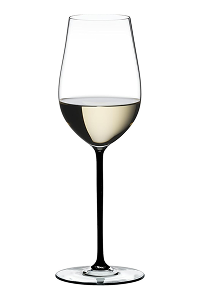
Riedel Fatto A Mano Riesling-Zinfandel Wine Glass, Black

Gabriel-Glas StandArt Crystal Wine Glasses, Set of 2 with
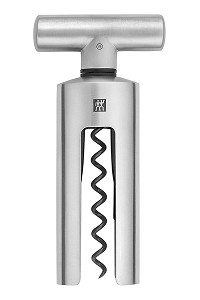
ZWILLING Sommelier Corkscrew Wine Opener
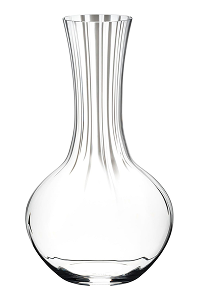
Riedel Performance Decanter
Zinfandel vs Primitivo: are these wines the same?
Zinfandel and Primitivo are both clones of the indigenous Croatian grape Tribidrag (Crljenak Kaštelanski). They are both known for the spicy, fruit forward wines they produce but Primitivo is distinctly Italian, produced in the Apulian region. These grapes are basically the same but there are differences in their growing conditions, climate and winemaking process. Californian Zinfandel ripens with high sugar and alcohol levels, yielding a sweet and smooth style. Primitivo, on the other hand, is early ripening, creating a fuller bodied red wine with reduced fruit notes.
Despite their similarities, US labeling laws dictate that winemakers are not to use both names interchangeably on their wine bottles.
| Aspect | Zinfandel (California) | Primitivo (Italy) |
|---|---|---|
| Origin | Clone of Tribidrag (Crljenak Kaštelanski) | Clone of Tribidrag (Crljenak Kaštelanski) |
| Ripening | Late ripening, often reaching high sugar and alcohol levels | Early ripening |
| Wine Style | Sweet, smooth and fruit forward with high alcohol | Fuller bodied, less fruit driven and more structured |
| Climate Influence | Sunny coastal California climate encourages bold, ripe flavors | Hot Mediterranean climate produces denser, more concentrated wines |
| Labeling Laws | Cannot be labeled interchangeably with “Primitivo” under US wine labeling regulations | Recognized in Italy as Primitivo, not interchangeable with “Zinfandel” |
You might also be interested in
FAQs on Zinfandel red wine
What does Paso Robles Zinfandel wine taste like?
Paso Robles Zinfandel is typically bold and full bodied, with flavors of raspberry, blackberry, licorice, pepper and sweet spice. In this region, the days are hot and the nights are cool, giving the grapes enough time to develop refreshing acidity and a rounded flavour profile. The Turley Dusi Zinfandel 2022 from Paso Robles is one of our top 10 wines.
Is a red Zinfandel wine sweet or dry?
Red Zinfandel wine is typically vinified as a dry wine with big flavors of red fruit, high alcohol content and medium tannins. There are some dessert style red Zinfandels that are sweet and produced from late harvest grapes that were left on the vines until they were overripe. Some winemakers also produce sweet, fortified Zinfandel wines by adding neutral grape spirits during production.
Do you chill red Zinfandel?
Yes, you should chill red Zinfandel wine to a temperature between 60°F and 65°F before serving. Doing this will enhance its fruity flavors and highlight its alcohol content. To achieve this, place it in your wine refrigerator for about 20 minutes before serving it. Be careful not to over chill, as this can mute its aromas.
What are the top rated red Zinfandel wines?
Our top rated red Zinfandel wines include Louis Martini Monte Rosso Gnarly Vine Zinfandel 2018, Outpost Howell Mountain Zinfandel 2022 and Robert Biale Vineyards Stagecoach Vineyard Zinfandel 2023. These three picks represent the finest expressions of red Zinfandel that California has to offer, with vibrant acidity, polished tannins and tasting notes of red fruits and exotic spices.
What is the difference between red Zinfandel and Cabernet?
Red Zinfandel typically has a higher alcohol by volume (ABV) when compared to Cabernet Sauvignon. Red Zin is bold with jammy flavors of blackberry and cherry, as well as vibrant acidity and soft, rounded tannins. Cabernet Sauvignon, on the other hand, has a more structured and full bodied profile with dark fruit notes and subtle earthy undertones.
What is another name for red Zinfandel?
Another name for red Zinfandel is Primitivo. It is referred to by this name in Italy, where the grape variety is used to craft full bodied and spicy red wines. The grape can also be called Tribidrag or Crljenak Kaštelanski as a nod to its Croatian origins, although this name is more suitable for its parent variety.
What is the best glass for Zinfandel?
The best glass for red Zinfandel wine is a large, tulip shaped glass with enough bowl space to swirl around the wine. The bowl shape is perfect for enhancing fruity flavors and smoothing out high tannins. When you serve red Zin in the right wine glass, you get to enjoy an optimal tasting experience.
