

Riesling wine: reviews & trends in 2026
Riesling wine is one of Germany’s most important and celebrated wines. With its distinctive balance of flinty minerality and honeyed sweetness, this white is a global favourite. Explore our top bottles and learn how to pair Riesling white wines with food. Our top pick is Albert Mann Riesling Wineck-Schlossberg 2022, rated 5/5.

10 Best Riesling white wine bottles to buy online
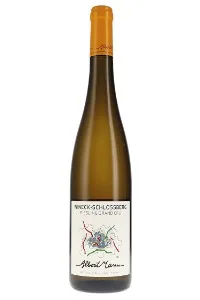
Riesling Wineck-Schlossberg Grand Cru – Albert Mann 2022
Alsace, France
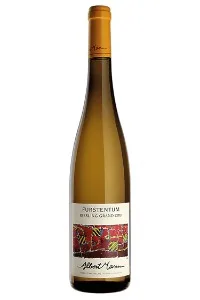
Riesling Furstentum Grand Cru – Albert Mann 2022
Alsace, France
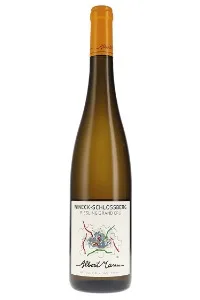
Riesling Schlossberg Grand Cru – Albert Mann 2022
Alsace, France
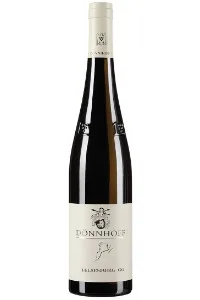
Felsenberg Felsentürmchen Riesling Grosses Gewächs – Dönnhoff 2022
Nahe, Germany
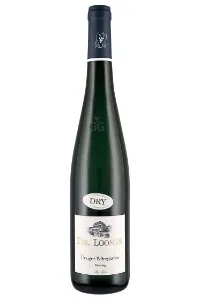
Ürziger Würzgarten Riesling Trocken Alte Reben Grosses Gewächs – Dr. Loosen 2023
Mosel, Germany
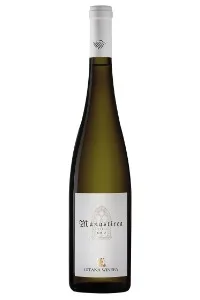
Manastirea Rohrbach Cru – Gitana Winery 2021
Moldova
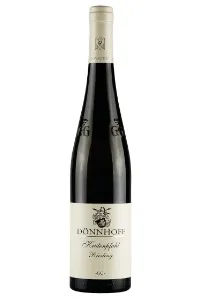
Krötenpfuhl Riesling Grosses Gewächs – Dönnhoff 2023
Nahe, Germany
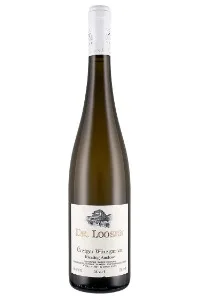
Ürziger Würzgarten Riesling Auslese – Dr. Loosen 2014
Mosel, Germany
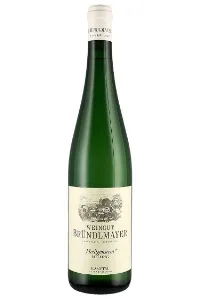
Heiligenstein Zobinger Riesling – Brundlmayer 2021
Lower Austria, Austria
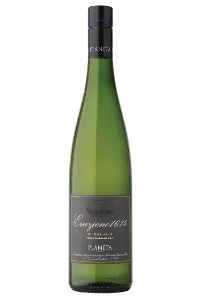
Eruzione Riesling 1614 – Planeta 2022
Sicily, Italy
The number one wine on our list, Albert Mann Riesling Wineck-Schlossberg 2022, is rated 5/5 by our experts and can be purchased for £92. This Grand Cru wine was organically grown and sourced from 60 year old vines planted on granite slopes. It offers exceptional ageing potential and an intense, salt driven profile.
What does Riesling wine taste like?
Riesling wine tastes of orchard fruits such as apple, pear, nectarine and apricot, along with notes of jasmine, honeysuckle, beeswax and a distinct mineral note. It is a light bodied white wine, known for sharp, high acidity and its ability to reflect terroir.
| Riesling Wine | Details |
|---|---|
| Grape Variety | 100% Riesling |
| Origin | Germany (Mosel, Rheingau, Pfalz), Alsace (France), Austria, USA (Washington, Oregon), Italy |
| Serving Temperature | 45 to 55°F (7.2 to 13°C) according to sweetness level |
| Decanting | Optional: young Rieslings usually do not require decanting. Older vintages may benefit from gentle aeration |
| Aging Potential | Depending on quality and style, it can age from 5 up to 30+ years |
| Flavor Profile | Aromas of citrus, green apple, stone fruits, floral notes, honey, petrol (in aged Rieslings) and pronounced minerality |
| Structure | Medium bodied to full bodied, vibrant acidity, often with varying levels of sweetness |
| Alcohol Content | Typically 7% to 13%, depending on style and ripeness |
| Ideal Glass | Narrow tulip shaped glass or a classic white wine glass |
| Food Pairing | Excellent with seafood, shellfish, spicy Asian dishes, pork, poultry, creamy cheeses, and dishes with a touch of sweetness or spice |
| Top Regions | Mosel, Rheingau, Pfalz (Germany); Alsace (France); Wachau, Kamptal (Austria); Columbia Valley (USA); Südtirol, Piedmont (Italy) |
| Notable Producers | Egon Müller, Joh. Jos. Prüm, Dr. Loosen, Robert Weil, Trimbach, Zind-Humbrecht, Fritz Haag, Gunderloch |
One aroma that defines all great Riesling wines is vibrant lime zest. This signature note, usually present in bone dry and sweet styles, acts as the grape’s calling card, delivering that instantly recognisable burst of freshness. However, there is more to the Riesling wine taste than its crispness; other flavours you can expect are vibrant citrus aromas of grapefruit, complemented by ripe peach (especially for late harvested grapes and warmer areas). The fruity aromas are layered by floral notes of honeysuckle, jasmine and orange blossom, and in exceptional vintages, also by smoky and honey nuances.
Did you know? Riesling white wine is renowned for its exceptional ageing potential due to high natural acidity levels, with some bottlings remaining drinkable well past 50 years! Aged German Rieslings tend to develop a “petrol” taste quality due to the development of TDN.
Spotlight on German Riesling wine
Germany is widely regarded as the global benchmark for Riesling wines because it is the grape’s historic home and the place where it achieves unparalleled balance between vibrant acidity and delicate aromatics. German Riesling wines benefit from the country’s cool northern climate and diverse soils, allowing the grape to ripen slowly while preserving its hallmark freshness. This long ripening season yields wines with intense citrus, green apple and often a subtle mineral smokiness, combined with naturally low alcohol and a remarkable ability to age. Here are three of our recommended bottles:
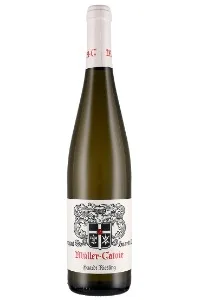
Haardt Riesling – Müller-Catoir – Palatinate, Germany
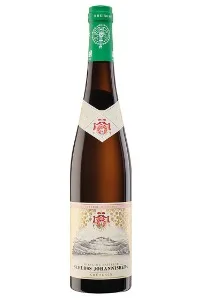
Riesling Trocken Gelblack – Schloss Johannisberg 2024 – Rheingau, Germany
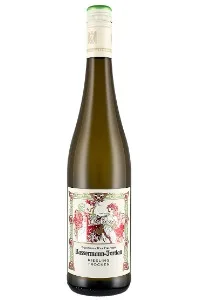
Riesling Trocken – Dr. von Bassermann-Jordan 2024 – Palatinate, Germany
Classification system for German Riesling wines
German Rieslings were grouped under the “Qualitätswein mit Prädikat” or QmP designation before it was renamed; you may still find the old name on wine labels bottled before 2007. In this system of classification, quality levels are determined based on the levels of sweetness of the wine, and there are 5 tiers from driest to sweetest:
- Kabinett is the lightest style of Riesling, produced from grapes with residual sugar levels between 148g/L and 188g/L. These styles range from dry to off dry.
- Spätlese means “late harvest”, and it is used to describe wines sweeter than Kabinett with residual sugar levels between 172g/L and 209g/L. They are typically rich, but a “Spätlese Trocken” label on the bottle indicates drier, high alcohol styles.
- Auslese is even sweeter than Spätlese at 191g/L to 260g/L of sugar in the grapes. The name directly translates to mean “select harvest”, and the berries are hand picked for their full ripeness levels. Noble rot grapes may also be included in the mix.
- Beerenauslese (BA) means “berry select harvest” and it is a quite rare and precious expression of Riesling. The grapes used are raisin like berries affected by botrytis rot, harvested at sugar levels higher than 260 g/L.
- Trockenbeerenauslese (TBA) wines are the rarest and sweetest category, crafted from handpicked fully raisinated grapes at sugar levels between 375g/L and 400g/L. The name means “dry berry select harvest”.
A sixth category may be included to describe Eiswein, which is crafted from Riesling grapes frozen on the vine and picked at 260+ g/L. This classification system for Riesling is unique to Germany, though Austria follows a similar model.
German Prädikatswein Riesling classification
| Category | Sugar Level at Harvest | Style / Sweetness | Notes |
|---|---|---|---|
| Kabinett Early ripening grapes | 148-188 g/L | Light bodied, from dry to off dry | Fresh, delicate, often lower alcohol |
| Spätlese Late harvest | 172-209 g/L | Medium sweet to rich Spätlese Trocken: dry, higher alcohol | Picked later for more ripeness and concentration |
| Auslese Select harvest | 191-260 g/L | Sweet to luscious | Hand selected ripe berries, sometimes include botrytised grapes |
| Beerenauslese (BA) Berry select harvest | > 260 g/L | Very sweet, dessert style | Rare, made from botrytised, raisin like berries |
| Trockenbeerenauslese (TBA) Dry berry select harvest | 375-400 g/L | Extremely sweet, nectar like | Rarest and most concentrated from fully raisinated botrytised berries |
What are the top Riesling wine brands worldwide?
While the most celebrated Riesling wine brands are German, renowned estates from France and California have also risen to global acclaim. Here are the top 3 Riesling wine producers making waves in the industry, selected by our team, from historic German vineyards to California’s new frontiers.
Weingut Dönnhoff is a renowned family estate located in Germany’s Nahe region. Established in 1761, the winery rose to international prominence under Helmut Dönnhoff’s leadership in the 1970s. He transformed what was a small farm into a top tier wine producer, acquiring quality vineyard sites like Hermannshöhle, where he planted world class Riesling. The estate is a long standing member of the Verband Deutscher Prädikatsweingüter (VDP) and they received a Merit of Honor in 1953.
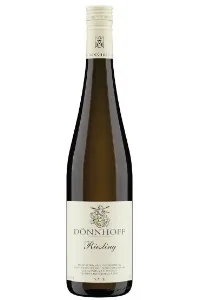
Riesling – Dönnhoff 2022 – Nahe, Germany
Weingut Dr Loosen is one of the largest producers in the Mosel winemaking region in Germany. Managed by Ernst Loosen since 1988, this winery is particularly known for their high quality Rieslings. They have won various awards, including “Riesling of the Year” in 1989 by the “Feinschmecker”, Decanter’s “Man of the Year” in 2005 and three stars in Eichelmann Deutschlands Weine 2009. In 2020, Dr Loosen was among the top 50 wine destinations worldwide and they are a member of the VDP (Association of German Quality Wineries).
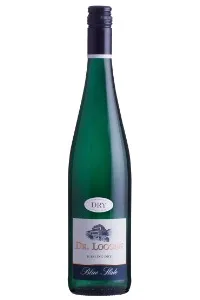
Riesling Trocken Blauschiefer – Dr Loosen 2024 – Mosel, Germany
Weingut Robert Weil is located in the Kiedrich area of Rheingau, Germany. They specialise in producing high quality Riesling, particularly from their top Kiedricher Gräfenberg vineyard. Founded in 1875 by Dr Robert Weil and now run by fourth generation Wilhelm Weil, the winery is considered one of Germany’s most influential producers. The Robert Weil winery has been a member of the VDP since 1907, producing approximately 700,000 bottles of Riesling annually.
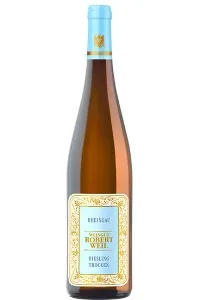
Riesling Trocken – Robert Weil 2023 – Rheingau, Germany
What are the types of Riesling white wine?
Riesling white wines are primarily categorised by ripeness and residual sugar levels. While in Germany they’re classified according to ripeness at harvest under the Prädikatswein system, in most other Riesling producing countries the classification focuses mainly on the wine’s residual sugar (RS) level.
Dry Riesling: Rieslings crafted in France, Austria and America are often drier than expressions from other countries. Grapes meant for dry Riesling wine are picked at full ripeness and they undergo complete fermentation in stainless steel tanks, leaving little to no residual sugar (typically less than 9g/L). The palate is clean and lean, making them ideal pairings with seafood and light appetisers. Their optimal ageing is between five and 15 years.
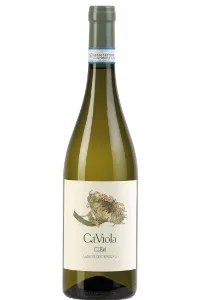
Clem Riesling – Ca’ Viola 2024 – Piedmont, Italy
Sparkling Riesling originated in Germany in the late 1800s, where it is called “sket” and it remains popular to this day. Usually in the Brut to Extra Dry category range (between 6 and 17 g/L RS), it pairs well with a variety of foods, including savoury smoked salmon, cured meats and spicy cuisine.
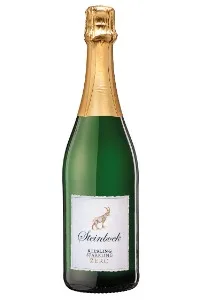
Sparkling Riesling Zero – Dr Fischer – Germany
Semi sweet Riesling can also be referred to as off dry Riesling. They have subtle hints of sweetness balanced by bright acidity, as well as notes of fresh citrus and stone fruit. Semi sweet Riesling (often between 18 and 45 g/L RS) can be paired with spicy dishes like Szechuan pork and they are best enjoyed between 10 and 20 years.
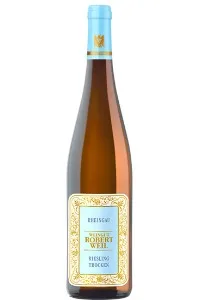
Riesling Kabinett – Robert Weil 2024 – Rheingau, Germany
Sweet Riesling wine: most German Rieslings tend to be sweet because of the cooler climate and terroir. These wines are produced from late harvest or after noble rot affected grapes. They exhibit strong aromas of honey, marmalade and dried apricot. Sweet Rieslings retain higher levels of residual sugar, commonly above 45g/L, and are best enjoyed between 10 and 30 years of age, shining alongside fruit based desserts.
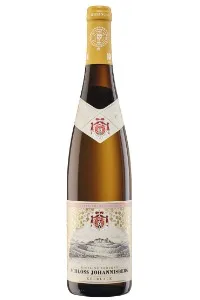
Riesling Grünlack Spätlese – Schloss Johannisberg 2023 – Rheingau, Germany
Inside the Riesling wine price range
Riesling presents one of the most fascinating price ranges in the wine world, ranging from exceptional value bottles to rare collector’s items commanding thousands. There are several factors that most influence the Riesling wine cost, one of which is the sweetness level. Producing sweeter Riesling styles is more expensive due to the grapes needing more time to mature or develop noble rot, with lower amounts of wine being yielded from the same grapes. The prestige of the winemaker also plays a key role: wineries with vineyards classified as German Grand Cru “Grosse Lage” sites are more sought after. A final factor influencing prices is also ageing: aged and mature Rieslings come with a higher cost as they’re not released on the market right away and need cellaring time to develop the much appreciated secondary flavours of honey, petrol and toast.
What wines are similar to Riesling?
For Riesling lovers wanting to explore new wines with similar freshness and aromatic depth, Pinot Gris is one of the closest alternatives. Much like Riesling, it offers a wide spectrum of styles (from bone dry to sweet) while keeping its vibrant acidity.
In the table below, we’ve gathered a selection of wines similar to Riesling and other exciting options.
| Wine / Grape | Top Wine | Tasting Notes | Comparison |
|---|---|---|---|
| Riesling vs Moscato | Moscato d’Asti – I Vignaoli di Santo Stefano 2025 – Piedmont, Italy | Fresh and lively, with intense sweet notes of sage, lychee and acacia flowers. | Moscato is more floral, fruity and sweeter than Riesling. It often has lower alcohol levels, with predominant notes of peach and orange blossom. |
| Riesling vs Pinot Grigio | Pinot Grigio – Schiopetto 2024 – Friuli-Venezia Giulia, Italy | Fragrant and warm sensations of plum, exotic fruit and acacia, with a balanced finish. | Pinot Grigio is typically drier and lighter bodied than Riesling with clear flavours of green apple, pear and citrus. |
| Riesling vs Chardonnay | Chardonnay Cuvée Bois – Les Crêtes 2023 – Aosta Valley, Italy | Harmonious and persistent, with pleasant aromas of yellow flowers, white fruit and citrus peel. | Chardonnay is a more versatile grape when compared to Riesling, that can yield lean and citrusy wines as well as full bodied and creamy oak aged expressions. |
Is Riesling wine collectable?
Riesling wine is considered highly collectable due to its complex tasting notes developing over time and unmatched ability to reflect its terroirs. Some bottles have achieved cult status among connoisseurs, highly sought after for their exceptional ageing potential (sometimes decades) and ability to evolve during cellaring time. The most collected high end Rieslings originate from small and limited productions from prestigious vineyards, usually resulting in unique taste characteristics.
Fun fact: the most expensive Riesling wine is a bottle of Egon Müller Scharzhofberger Riesling Trockenbeerenauslese, currently priced at the whopping sum of £10,285!
What are the best vintages for Riesling wine?
Riesling is one of the few white wines that improves for decades, making the best Riesling vintages highly sought after by collectors. However, not every year ages equally! Climate conditions during the growing season play a crucial role in determining a wine’s longevity and market value.
Let’s see together the Riesling wine vintage chart, with the best years and their most sought after bottles.
| Riesling Best Vintage | Recommended Riesling Wine | Tasting Notes | Vintage Characteristics |
|---|---|---|---|
| 2025 | Valle Isarco Riesling – Abbazia di Novacella 2025 – South Tyrol, Italy | Vibrant and mineral, with citrus and herbal aromas intertwines wth floral notes of jasmine and wisteria. | A challenging growing season led to clear, high energy wines with electric acidity. |
| 2023 | Rosacker Riesling Grand Cru – Hunawihr 2023 – Alsace, France | Dry and broad on the palate, with notes of pear, citrus fruits and typical minerality alongside a persistent finish. | Despite imperfect growing conditions, the year produced wines defined by their high tension, vibrant acidity and elegant profiles. |
| 2022 | Kreuznacher Kauzenberg Riesling – J. Montigny 2022 – Nahe, Germany | Dry and fresh, with a medium bodied palate and flavours of citrus, tropical fruits and minerality. | A very hot and dry summer followed by rains that yielded balanced wines with supple acidity and full ripeness. |
| 2020 | Florimont Riesling – Domaine de la Ville de Colmar – Alsace, France | Delicate and balanced, with expressive aromas of dried apricot and lemon, as well as mineral hints. | Grapes this year achieved ideal ripeness thanks to cool nights that preserved minerality and acidity perfectly. |
New to Riesling wine? Start with these 4 tips
Riesling is perfect for those who are just starting. Unlike bolder reds, it offers a wide spectrum of sweetness levels, making it easy to find one that suits your palate. If you are unsure where to begin when selecting a Riesling wine, here are some expert tips to guide you:
- Start with a style that matches your preferred sweetness levels. Read the labels properly and check the alcohol content to identify dry (higher alcohol) and sweet (lower alcohol) styles.
- Serve Riesling well chilled, aiming for a temperature between 7°C and 13°C to enhance its nuanced flavours.
- Select the right glassware! A tulip shaped white wine glass with a narrow rim and wide bowl is perfect for concentrating its floral and fruity aromas.
- Don’t be afraid to experiment with food pairings. Try everything from spicy cuisine to cheese boards and dessert.
Another great way to explore Riesling wine? Try it in fun, easy mixes like a fruity Riesling sangria or a refreshing cocktail!
How to serve Riesling white wines
The delicate aromatics and vibrant acidity of Riesling whites demand careful serving to showcase their full potential. Here is the perfect way to serve Riesling like a pro:
- Store bottles horizontally in a cool and dark place.
- Serve dry Riesling wine at 10-12°C, off dry and sweet styles at 7-9°C.
- Use a slender tulip shaped glass to concentrate aromas. Some brands have dedicated Riesling glasses.
- Decant mature Rieslings for 30 minutes before pouring.
- Chill bottles in ice and water (never in the freezer!) during serving.
Recommended serving temperatures for Riesling white wines
| Riesling Style | Optimal Temperature (°F and °C ) | Notes |
| Dry Riesling (e.g., Trocken, Alsace, GG) | 10 to 12°C | Cool enough to stay crisp yet warm enough to release floral and mineral aromatics |
| Off Dry Riesling (e.g., Kabinett, Spätlese) | 7 to 9°C | Slightly cooler to balance subtle sweetness with acidity |
| Dessert Riesling (e.g., BA, TBA, Eiswein) | 6 to 7°C | Served colder to focus richness and keep the wine lively |
| Older Vintages (over 10 years) | 9 to 11°C | A touch warmer than younger Riesling wines to open up complex aged aromas |
Given Riesling’s bracing acidity (pH often around 2.9 and 3.1), serving it too cold will mute its complex floral and mineral notes, while too warm exaggerates alcohol perception (the Riesling ABV is typically 8 to 13%).
What food pairs well with Riesling?
Few wines pair as flawlessly with food as Riesling. Its vibrant acidity cuts through rich flavours, while its spectrum of styles makes it endlessly adaptable.
Some of our top food pairings with Riesling wines based on style are:
- Dry Riesling: seafood (oysters, ceviche), salads, roasted root vegetables.
- Off Dry/Semi sweet Riesling: spicy dishes, sweet and sour sauces, white meats
- Sweet/Dessert Riesling: fruit based desserts, salty cheeses, spicy barbecue.
Below, you’ll find a table with Riesling food pairing suggestions for our top 5 wines, based on a wide range of food types.
| Food | Best Riesling Wine Bottle | Aged | Type & Structure |
|---|---|---|---|
| Citrus marinated scallop carpaccio, sauerkraut, tarte flambée, goat cheese | Riesling Wineck-Schlossberg Grand Cru – Albert Mann 2022 – Alsace, France | 1-2 years | Dry, crystal clear and taut on the palate, with incisive acidity and measured aromas of white flowers, citrus fruits and wet stone minerality. |
| Cantonese squid with spring onions and ginger, baked cod, green asparagus risotto, seared foie gras | Riesling Furstentum Grand Cru – Albert Mann 2022 – Alsace, France | 1-2 years | Delicate and linear nose, with notes of citrus, orange blossom and a mineral hint. The attack is lively and saline in the mouth, supported by well integrated acidity leading to a long and precise finish. |
| Tuna sashimi, white asparagus with mousseline sauce, mild Munster cheese | Riesling Schlossberg Grand Cru – Albert Mann 2022 – Alsace, France | 1-2 years | Vivid, direct acidity is balanced by a saline streak and subtle fruity sweetness, displaying hints of apple, lemon, peach and lime with subtle nuances of mango and lemongrass. |
| Poached white fish, roasted chicken, ceviche, veal medallions in mushroom sauce | Felsenberg Felsentürmchen Riesling Grosses Gewächs – Dönnhoff 2022 – Nahe, Germany | 3-5 years | Rich and full bodied in structure, balanced by fine and ripe acidity, while offering notes of flint, citrus and white flowers. |
| Pad Thai, lamb chops with Ras el Hanout, salads with vinaigrette, Manchego. | Ürziger Würzgarten Riesling Trocken Alte Reben Grosses Gewächs – Dr. Loosen 2023 – Mosel, Germany | 1-3 years | Notes of peach, wild strawberry, mineral and yeast are present on the nose. The body is enveloping and full, yet savoury and fresh with a spicy undertone. |
Our tip: for an unforgettable pairing, serve a Mosel Kabinett Riesling with spicy Thai green curry. The wine’s delicate touch of sweetness softens the heat of the dish, while its lime zest acidity refreshes the palate in between bites!
How to spot the perfect Riesling wine glass
Unlike fuller bodied whites like Chardonnay that benefit from wider bowls to soften rich flavours, Riesling shines best in a narrower, U or V shaped glass. This shape concentrates its fresh fruit and floral notes while preserving the petrol and honey notes. Here is our top pick for Riesling wine glasses that underscores the elegance of this white wine.
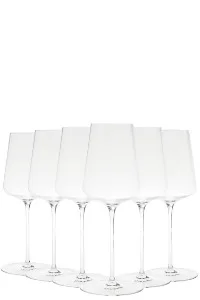
Sophienwald White Wine Glasses 225 mm/420 ml
What is Riesling wine and how is it made?
Riesling wine is a white wine crafted from the aromatic white grape variety of the same name. These wines can be dry, semi sweet, or sparkling and they are characterised by pronounced acidity and refreshing notes. Sommeliers consider it one of the top three white wine varieties in the world, alongside Sauvignon Blanc and Chardonnay.
Riesling is highly influenced by the terroir in which it is produced, yielding a distinctly different taste depending on its place of origin, as well as the winemaking process.
So, how are Riesling wines made?
- Viticulture: Riesling grapes are resistant to cold and ripen slowly. They thrive in cooler climates, growing on vineyard sites situated on steep slopes with excellent drainage. The major principle that winemakers stick to during viticulture is to keep it “long & low”. This means that the ideal growing conditions are a climate that allows for long and slow ripening, as well as proper pruning to keep the yields moderate and flavour concentrated.
- Harvesting typically happens in late fall. It is carried out with great care to keep the delicate grape skins from being crushed or bruised. If there is no proper handling, the broken skins can leak tannins into the juice, making it coarse.
- Grapes are pressed after harvesting to extract their juice (or must), which is then separated from the skins. Some producers prefer to press whole clusters to retain more acidity and have better minerality in the wines, so destemming is not a widespread practice. After pressing, a small amount of sulfur dioxide may be added to the juice to prevent oxidation and reduce microbial activity.
- Fermentation occurs in temperature controlled stainless steel tanks, typically between 10°C and 18°C. Winemakers use yeast strains that can tolerate the lower temperatures. For dry Riesling, fermentation continues until most of the sugar is converted into alcohol. On the other hand, medium sweet and sweet styles involve stopping fermentation halfway to keep some residual sugar. Malolactic fermentation is blocked to preserve the acidic and tart quality of Riesling wines.
- Most Riesling wines are aged in stainless steel or neutral wood ovals. The use of oak barrels is not encouraged because oak flavours can distract from the refreshing quality of Rieslings. Ageing and racking for four to six months is usually enough.
- Cold stabilisation: Riesling is often stored at a temperature just above its freezing point (somewhere between -1°C and 4°C). It is kept at this temperature until almost all the tartaric acid has crystallised and precipitated out of the wine. This process prevents the formation of crystals or wine diamonds in the bottle.
- Fining, filtering and bottling: fining involves the use of agents like Bentonite to improve heat stability and remove cloudiness from the wine. The filtration process removes any remaining yeast or impurities present in the wine and polishes its appearance. Most Riesling wines are bottled early to preserve their fruity character.
Riesling grapes and juice are often chilled throughout the vinification process to maintain freshness and nuanced aromas. There are some modifications in the times of harvesting depending on the preferred style of Riesling being produced:
- Grapes meant for sweeter styles are harvested later than those meant for dry Rieslings.
- Lusciously sweet Rieslings (Auslese, Beerenauslese, Trockenbeerenauslese) have their berries left on the vine to be attacked by noble rot. This disease causes the grapes to shrivel up and become raisin like, resulting in a very sweet and concentrated wine with low alcohol.
- Riesling grapes used to make ice wines are left on the vine for so long that the winter frost comes. They are then harvested around -12°C and pressed to give decadently sweet wines.
All about the Riesling wine grape
Authentic Riesling wines come only from white grapes, although a rare red Riesling grape has recently been discovered. It is a somewhat more acidic mutant version of the white Riesling grape that is less susceptible to noble rot. Riesling white wine grapes thrive in cool climates like Germany’s Mosel and Alsace’s granite slopes, where Riesling wine grapes develop their signature high acidity and mineral transparency.
Unlike blended whites, true Riesling remains 100% white varietal, offering a crystalline expression of terroir across styles from bone dry to honeyed sweet.
Curiosity: with its 23.596 hectares, Riesling covers 7.5% of all vineyards in Germany but accounts for over 90% of premium wines exported.
Riesling wine regions from Europe to the New World
Riesling’s story begins in Germany, especially in the Mosel region, the birthplace of this noble grape. Here, steep slate slopes and a cool climate create ideal conditions for producing expressive wines. Traditional German Riesling is rarely blended with other grape varieties and it is typically aged in neutral stainless steel tanks to highlight the pure flavours of the grape. Riesling has expanded well beyond Germany, with acclaimed bottles coming also from France, Italy, the US and Australia. Let’s start exploring the regions producing German Rieslings:
- Mosel: a third of all the Riesling in Germany is produced in the Mosel Valley. This area produces wines with distinctive minerality and delicate floral and fruity notes that can age for decades.
- Rheingau is known for producing some of the country’s most structured and robust Rieslings. This region takes the lead with significant innovations in winemaking and it is home to notable winemakers like Schloss Johannisberg.
- Pfalz is a warm and productive region that yields highly acidic Rieslings with a characteristic intensity and a persistent fruity finish. Known for growing a large amount of Riesling, Pfalz enjoys a favourable climate that results in a harmonious and elegant wine.
- Nahe Rieslings are characterised by a notable minerality accompanied by vibrant acidity and fruit notes. They also have an impressive ageing potential, improving significantly as they mature.
While Germany remains the spiritual home of Riesling, the grape has also adapted beautifully across the globe. Riesling bottlings from warmer regions such as Alsace, Australia’s Clare Valley or California tend to be riper, rounder and higher in alcohol, often with more tropical or stone fruit notes and less of the razor edged acidity that defines the German styles:
- In Alsace (France), over a fifth of vineyards grow Riesling wines. The soils here are calcareous and winemakers favour drier wines with higher alcohol content that age remarkably well.
- Wachau (Austria) grows Riesling in free draining mineral granite and mica soils. The style of Austrian Riesling wine is mostly dry with a high alcohol content, best enjoyed around 5 years of ageing.
- In Clare Valley (Australia), the warm climate allows for the production of special thick skinned grapes that yield wines with an oily texture. Australian botrytized Rieslings are immensely flavorful and delicious.
- Winemakers in the Finger Lakes, USA, generally produce light bodied and effervescent styles that range from dry to sweet. Producers in the Finger Lakes also notably craft Riesling ice wines.
- Alto Adige (Italy): this region is noted for its rich and aromatic Rieslings that are crisply acidic with a stony minerality.
Fun fact: Mosel’s vineyards are so steep (up to 70 degrees!) that workers often need ropes to harvest the grapes.
How we rate Riesling white wines
Every Riesling white wine that makes it onto our list has been tasted and scored by our editorial team independently, with no exception. We are deliberate in our selections, rarely recommending bottles that are rated less than 4.6 out of 5. Every bottle that makes the cut has earned its place based on merit alone.
We work with a 50 point scoring system under the hood, which we then convert into the simple 5 point scale for you:
- 5 = Exceptional
- 4 = Excellent
- 3 = Very Good
- 2 = Good
- 1 = Fair
What actually goes into the score?
- Appearance (up to 5 points): we begin by evaluating clarity, depth of colour and brightness to get the first clues about what’s coming.
- Aroma & bouquet (up to 15 points): next, we consider the intensity, layered complexity and how clean and flaw free the nose of the Riesling wine is.
- Flavour & palate (up to 20 points): acidity, tannin, alcohol and mouthfeel are some of the qualities that we consider here. They need to be pulling together in the same direction.
- Overall impression (up to 10 points): how does it all come together? We’re looking at the harmony, typicity and the length of the finish.
Bottles that received scores of 4 and above signal something genuinely worth seeking out. Anything below 4 failed to impress us.
We also hold every dry white wine to two additional standards:
- Aromatic complexity: young Riesling offers intense aromas reminiscent of lime peel, green apple, peach and apricot, while aged Rieslings develop a natural, petrol like aroma over time.
- Terroir expression: a good quality Riesling is highly reflective of its soil and climate, cool climate offerings tend to be crisp and higher in acidity, with strong mineral notes, while Rieslings from warmer areas are more intensely fruity.
One last note from us: numbers are useful, but they are not all you need. They only reflect our tasting conditions and honest opinions about a given bottle, nothing more, nothing less. We encourage you to read the tasting notes attached to each bottle to help you find a wine you will truly love.
FAQs on Riesling wine
What is the best Riesling wine?
Professional wine lovers consistently rate Scharzhofberger Riesling Auslese Goldkapsel 2007 by Egon Müller as the best Riesling wine ever produced. However, other legendary Riesling brands like J.J. Prüm, Dönnhoff and Dr Loosen also craft outstanding bottles prized for their precision, balance of acidity, fruit concentration and ageing potential. Together, these wines embody the pinnacle of Germany’s Riesling tradition and set the global benchmark for excellence.
How do you pick a good Riesling wine?
Picking a good Riesling wine requires understanding how vintage conditions influence quality. The most celebrated years, such as 1971, 1989, 2001 and 2015, benefited from extended cool growing seasons that preserved Riesling’s acidity while achieving perfect ripeness. These balanced vintages produced good Riesling wines with immediate charm and decades long ageing potential. For standout bottles, look to steep slate soiled vineyards in the Mosel or granite rich sites in Alsace!
Is Riesling a high quality wine?
Yes, Riesling is one of the world's high quality wines, revered by sommeliers and collectors for its precision and elegance. Its remarkable ability to express terroir through vibrant acidity and layered aromatics rivals even top Burgundies. Although often less commercially visible than Chardonnay, good Rieslings from Germany's Grosses Gewächs (GG) sites - dedicated to top dry wines - or Alsace Grand Cru vineyards demonstrate equal ageing potential and depth.
What type of wine is Riesling?
Riesling produces intensely aromatic white wines defined by a piercing acidity and remarkable ability to reflect terroir. The grape's thin skins and late ripening nature allow for an impressive range of styles from steely dry (often labelled as Trocken) with crisp green apple notes to lusciously sweet with layers of apricot and honey. Unlike fuller body whites, Riesling retains elegance across all styles and low alcohol levels. Its signature petrol note tends to emerge with age.
Is Riesling a dry wine?
Many premium Rieslings are fully dry, particularly the French ones from Alsace or labelled "Trocken" in Germany and Austria. These wines highlight racy acidity and pronounced mineral depth without residual sugar, making them one of the best pairing choices for oysters or seafood. Even off dry styles (such as Kabinett) contain only subtle sweetness offset by the grape’s natural acidity. The driest examples often come from warmer sites in the Pfalz or Rheingau, where ripeness can be achieved without sacrificing freshness.
Is Riesling sweet?
Although Riesling is renowned for producing exceptional sweet wines, most of it is actually vinified dry or off dry. The sweet versions (from Auslese to the ultra rare TBA) represent only about 15% of the total production and rely on the perfect development of the noble rot (botrytis). Even these rich styles maintain Riesling’s hallmark bright acidity that balances the sweetness, creating refined tension between sugar and structure. The sweetest Riesling styles from Germany's Prädikat system are remarkably long lived, with an ageing potential of over 50 years.
What is Riesling wine ABV?
Riesling's ABV varies by brand, style and region. Light Kabinett wines from cool vintages may have as low as 8% ABV, while full bodied dry Alsace versions reach 13% to 14% ABV. This range stems from natural sugar levels present at harvest: grapes meant for sweet wines are picked late with higher sugar levels that ferment into alcohol, while drier styles fully convert their sugars. The wine's acidity creates balance, with premium examples never showing heat despite their potential alcohol range.
What are the best Riesling wine producers?
The brands considered to be the best Riesling producers are Egon Müller, Weingut Dönnhoff, Dr Loosen and Weingut Robert Weil. Other noteworthy estates are Keller (renowned for their G-Max bottlings) and the French Trimbach (famed for the legendary Clos Ste Hune). These brands combine generations of expertise with exceptional vineyard sites to craft benchmark expressions of Riesling, each showcasing the grape’s remarkable versatility and depth.
Is Riesling white wine produced only in Germany?
While Germany's Mosel and Rheingau remain the global benchmarks for Riesling, the grape thrives in a wide range of terroirs. Alsace is known for producing fuller bodied dry styles, while Austria's Wachau offers sleek and mineral driven expressions. In the New World, Australia's Clare Valley and New York's Finger Lakes have earned international acclaim for their impressive high quality. Chile and South Africa are also now crafting compelling modern examples. Still, it is Germany that consistently delivers the most ageworthy, complex and collectable bottlings.
How long can you keep a bottle of Riesling wine open?
Riesling's natural high acidity helps it retain freshness after opening. Dry styles typically remain vibrant for 3 to 5 days if recorked and refrigerated, while sweeter styles can keep their freshness for up to a week. Older vintages (10+ years) tend to be more delicate and are best enjoyed within 2 to 3 days of opening. For maximum longevity, transfer any remaining wine into a smaller bottle or an airtight container to reduce oxygen exposure.
Should Riesling wine be chilled?
Yes! Proper serving temperature is key to unlocking Riesling's complexity. Dry styles show their best between 10° to 12°C, a temperature that is cool enough to refresh the palate yet warm enough to release aromas. Off dry versions such as Kabinett or Spätlese are ideally served between 7 and 9°C to retain harmony between sweetness and acidity. Dessert styles, including Beerenauslese and Trockenbeerenauslese (BA and TBA), shine when served between 6 °C and 7°C to highlight their richness. It is important not to overchill Riesling as excessive cold can mute its delicate floral nuances.
What is the difference between Riesling wine and Gewürztraminer?
Riesling is a highly acidic wine with bright flavours of fresh fruits and citrus. It is produced in a range of styles, including dry, off dry, sweet or sparkling and its acidity makes it a versatile food pairing option. Gewürztraminer is bolder and more aromatic, known for spice aromas of lychee, rosewater and tropical fruit. It tastes perfect when paired with rich and savoury dishes.
